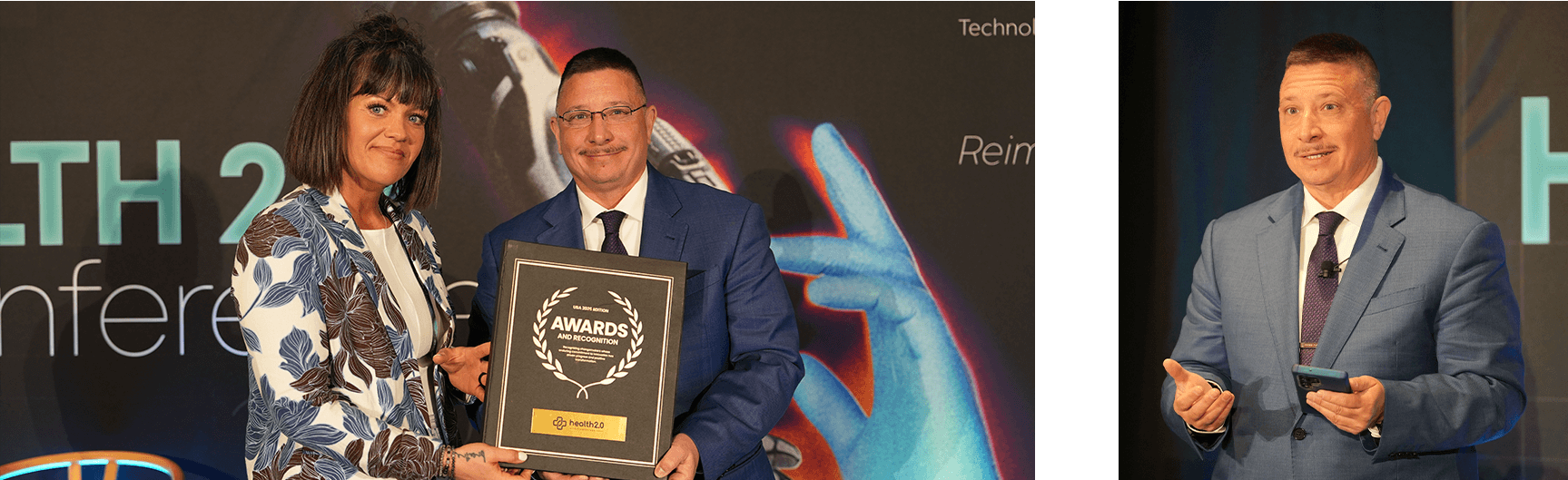
Oak’s Experience At The Health 2.0 Conference
Oak described the Health 2.0 Conference as a space unlike many professional events they had experienced before. They appreciated how naturally conversations developed and how open attendees were to learning, sharing experiences, and exploring possibilities together. Beyond formal sessions, Oak experienced robust discussion and meaningful networking throughout our health and wellness conference. Whether during lunches, networking gatherings, or evening events, interactions developed organically and often expanded beyond planned meetings. They explained that many conversations began when attendees approached them after seeing their keynote or panel discussions, expressing interest in exploring shared ideas and professional synergies.
Throughout the three days of our health summit, Oak participated in discussions exploring resilience, leadership, and human-centered care. During their keynote at the Health 2.0 Conference, “Medical Trauma & The Safety Imperative: Supporting Patients And The Teams Who Treat Them,” Oak highlighted how medical trauma affects both patients and providers. They discussed how nervous system responses influence patient experiences and emphasized that trauma-informed care, psychological safety, and provider awareness can strengthen trust, communication, and treatment outcomes.
At the Founders 2.0 Conference panel discussion, “Creating Revenue Streams That Build A Resilient Business,” Oak emphasized that resilience is about integrating challenges into future growth rather than simply recovering from them. They discussed the importance of building additional revenue streams, adapting to changing circumstances, and creating long-term business stability while continuing to deliver value through periods of uncertainty.
During the CXO 2.0 Conference panel discussion, “Strengthening Employee Resilience: A Key To Personal And Workplace Success,” Oak discussed resilience as the ability to move forward through adversity rather than simply returning to a previous state. They emphasized integrating challenges into future growth while highlighting the importance of organizational preparedness, crisis leadership, business continuity planning, and equipping leaders to respond effectively before a crisis occurs.
They appreciated the collaboration that developed even before the sessions began. Oak shared that fellow panelists met multiple times before arriving on site to ensure thoughtful discussion, smooth flow, and meaningful takeaways for attendees. This preparation helped create discussions grounded in both expertise and practical application.