

Improving Hospital Design For Better Infection Control
Posted on : February 24, 2023
A functional and efficient hospital design is an important part of healthcare. Environments that promote healing enhance the delivery of patient care. The COVID-19 pandemic greatly impacted hospital design. Healthcare conferences and events, such as our very own Health 2.0 Conference, revealed that many US hospitals have changed hospital designs to support infection control and patient safety. Let’s explore these improvements and assess the efforts made by Hospitals in upgrading infection control.
What Constitutes Hospital Design?
Hospitals are complex institutions that require careful planning and design to ensure that they are safe, comfortable, and welcoming for patients while supporting healthcare professionals' needs. Hospital design considers the need for flexible and adaptable spaces that can accommodate changing healthcare needs and emerging technologies.
Hospital design in the US is a dynamic and evolving field. It continues to adapt to meet changing healthcare needs and priorities. It involves a wide range of considerations, from the needs of patients and staff to the latest advances in medical technology and building design.
Health conferences in recent years discuss that there has been an increasing focus on patient-centered design. This prioritizes the needs and preferences of patients in hospital environments. This approach recognizes that the physical environment can significantly impact patient outcomes, including their ability to heal, recover, and feel comfortable during their hospital stay.
Overall, hospital design plays a critical role in delivering high-quality healthcare services. Some of the top healthcare conferences in Dubai, such as the Health 2.0 Conference, aim to create awareness about the importance of hospital designs in various countries and cultures. An environment that promotes healing enhances the well-being of patients and supports the efficient and effective delivery of medical care constitutes a good hospital design.
Importance Of A Good Hospital Design
Renowned health conferences outline the crucial benefits of an optimal hospital design. Hospital design can significantly impact patient outcomes, including patient safety, comfort, and healing. A well-designed hospital can help reduce patient stress, improve communication between patients and staff, and promote better health outcomes.
Good hospital design can also impact staff efficiency and productivity, which is critical for providing high-quality care. Speakers at famous healthcare conferences and events highlight that a well-designed hospital can improve the workflow and communication between staff, reducing the time and effort required to complete tasks and enabling staff to focus more on patient care.
Efficient designs can reduce the time and effort required to transport patients, improving patient throughput and reducing wait times. Additionally, energy-efficient building systems can help reduce operating costs, benefiting the hospital and the environment.
According to top healthcare conferences in Dubai, hospitals can create healthcare environments by prioritizing patient-centered design, technology integration, flexibility, sustainability, and community impact.
Hospital Design In The US
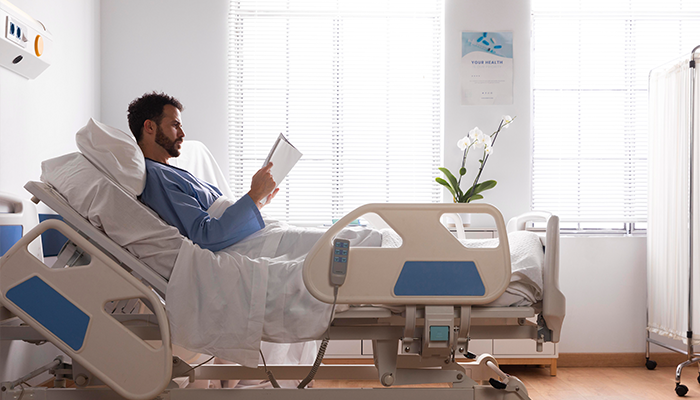
Hospital design in the US has undergone significant changes in recent years, focusing on creating healthcare environments that promote healing, improve patient outcomes, and enhance staff satisfaction. Here are some key trends and innovations in hospital design in the US, as discussed in recognized healthcare conferences and events:
-
Patient-Centered Design:
Hospital design in the US has increasingly focused on patient-centered design, which prioritizes the needs and preferences of individual patients. This includes creating environments that are welcoming and comfortable. Usually, to achieve this goal, hospitals practice:
- using natural light,
- using calming colors, and
- providing ample spaces for families to visit.
-
Technology Integration:
Various health conferences focus on modern hospital design. Many hospitals incorporate advanced technologies to improve patient outcomes and staff efficiency. This includes:
- the use of digital health monitoring tools, such as sensors and wearables,
- tracking patient health data, and
- the use of robotic systems for medication delivery and patient transport.
-
Flexibility and Adaptability:
US hospital design emphasizes flexibility and adaptability to support changing healthcare needs. This includes creating spaces that can be easily reconfigured to meet changing patient demands and providing adaptable equipment and furniture that can be adjusted to meet individual patient needs.
-
Green Design:
Hospitals in the US are increasingly designed with sustainability and environmental friendliness in mind. Some of the top healthcare conferences in Dubai emphasize using energy-efficient building materials and systems. These incorporate natural light and green spaces and promote eco-friendly practices, such as recycling and waste reduction.
-
Patient Safety:
Hospital design in the US prioritizes patient safety. This is done by incorporating features such as hand hygiene stations, antimicrobial surfaces, and isolation rooms to prevent the spread of infection. Additionally, staff communication systems and digital patient records can help prevent medical errors and improve patient outcomes.
How Can Hospital Designs Promote Infection Control?
Improving hospital design is a crucial aspect of infection control, as it can help prevent the spread of infectious diseases and improve patient outcomes. Here are some ways in which hospitals can be designed to improve infection control:
-
Separate Patient Rooms:
One of the most efficient ways to prevent the spread of infections in hospitals is to separate patients from each other. Private rooms with their bathrooms are ideal, as they minimize the risk of cross-infection. When designing new hospitals or renovating existing ones, architects should consider ways to maximize the number of single-patient rooms.
-
Good Ventilation:
Proper ventilation is essential in preventing the spread of airborne infections, such as COVID-19. Hospitals should have a well-designed ventilation system to quickly and effectively remove airborne pathogens.
-
Hand Hygiene Stations:
Hand hygiene is also crucial in preventing the spread of infections, and hospitals should provide ample hand hygiene stations for staff, patients, and visitors. These stations should be easily accessible and conveniently located throughout the hospital.
-
Easy-To-Clean Surfaces:
Hospital surfaces should be easy to clean and disinfect to prevent the spread of infectious agents. Materials that are smooth, non-porous, and easy to clean should be used whenever possible.
-
Designated Areas For Infection Control:
Hospitals should have designated areas for infection control, such as isolation rooms and negative pressure rooms. These areas should be easily accessible and well-marked to prevent the spread of infectious agents.
-
Consideration For Traffic Flow:
Hospitals should be designed to minimize the flow of patients and staff through common areas, such as hallways and waiting rooms. This can be achieved by using separate entrances and exits for different departments, designing hallways with wider spaces, and providing waiting areas separated from high-traffic areas.
-
Use Of Technology:
New technologies such as UV light sterilization, air purifiers, and touchless systems can be incorporated into hospital design to enhance infection control.
Speakers at famous healthcare conferences and events, like the Health 2.0 Conference, believe that the use of technology in hospital design is gradually increasing. 77% of hospital executives report that they plan to invest in digital health technology over the next three years. This may lead to more efficient healthcare processes.
Issues In Hospital Design: Elements Of Design That Hospitals Should Consider-
According to a 2019 American Society for Healthcare Engineering survey, the top three priorities for hospital design in the US are patient-centered care, operational efficiency, and staff satisfaction. In a modern set-up, where lifestyle changes have increased the risk of disease, it is necessary to steer clear of certain design elements to create an optimal hospital design. Famous health conferences have summarized these as follows -
-
Limited Space:
Many hospitals in the US are facing the challenge of limited space, particularly in urban areas where land is expensive and scarce. This can limit the ability to create functional and efficient healthcare environments that meet the needs of patients and staff.
-
Aging Infrastructure:
Various healthcare events and conferences discuss this issue concerning significant upgrades or renovations in hospital infrastructure. A weak architecture can make incorporating the latest medical technologies difficult or meeting current building codes and regulations a problem.
-
Inadequate Infection Control:
Hospital design must prioritize infection control to prevent the spread of disease among patients and staff. This can be challenging in older facilities not designed with modern infection control protocols in mind.
-
Limited Budgets:
Healthcare budgets are often tight, and hospital design must balance the need for functional, high-quality spaces with the financial resources available to achieve these goals.
Hospitals can create functional and efficient healthcare environments by addressing these challenges and issues. This shall help promote patient healing, support staff efficiency, and meet evolving healthcare needs. The Health 2.0 Conference, one of the largest health conferences in the country, talks about the changing demands of the healthcare system and shares ways in which hospitals can tackle them.
Bottom Line
Many health conferences report that hospitals have implemented negative-pressure isolation rooms, increased the use of telemedicine, and reduced the number of shared patient rooms. This means that slowly but surely, steps are being taken to improve the healthcare sector in the nation. Such steps not only enhance healthcare delivery in the US but also make the citizens feel safe, secure, and disease-free!
Recent Blogs
-

How COVID-19 Has Changed Clinical Trial Management
Posted on : June 20, 2022 -

Experience The Extraordinary With Mindful Meditation
Posted on : June 15, 2022 -

Healthcare Innovations: 2022 Trends and Technologies You Must Know
Posted on : June 03, 2022 -

Disruptions In Healthcare: The Role Of New Technologies
Posted on : May 27, 2022 -

Latest Trends in Wearable Healthcare Devices
Posted on : January 20, 2022 -

Impact Of Social Media On Mental Health
Posted on : January 19, 2022 -

Hope On The Horizon: Novel Treatment Method For Depression
Posted on : January 05, 2022 -

MedTech Trends To Watch In 2022
Posted on : January 04, 2022 -
Modernizing Healthcare With VR Tools
Posted on : December 28, 2021 -

Fitness Apps & Consumer Health: A Quick Review
Posted on : December 16, 2021